





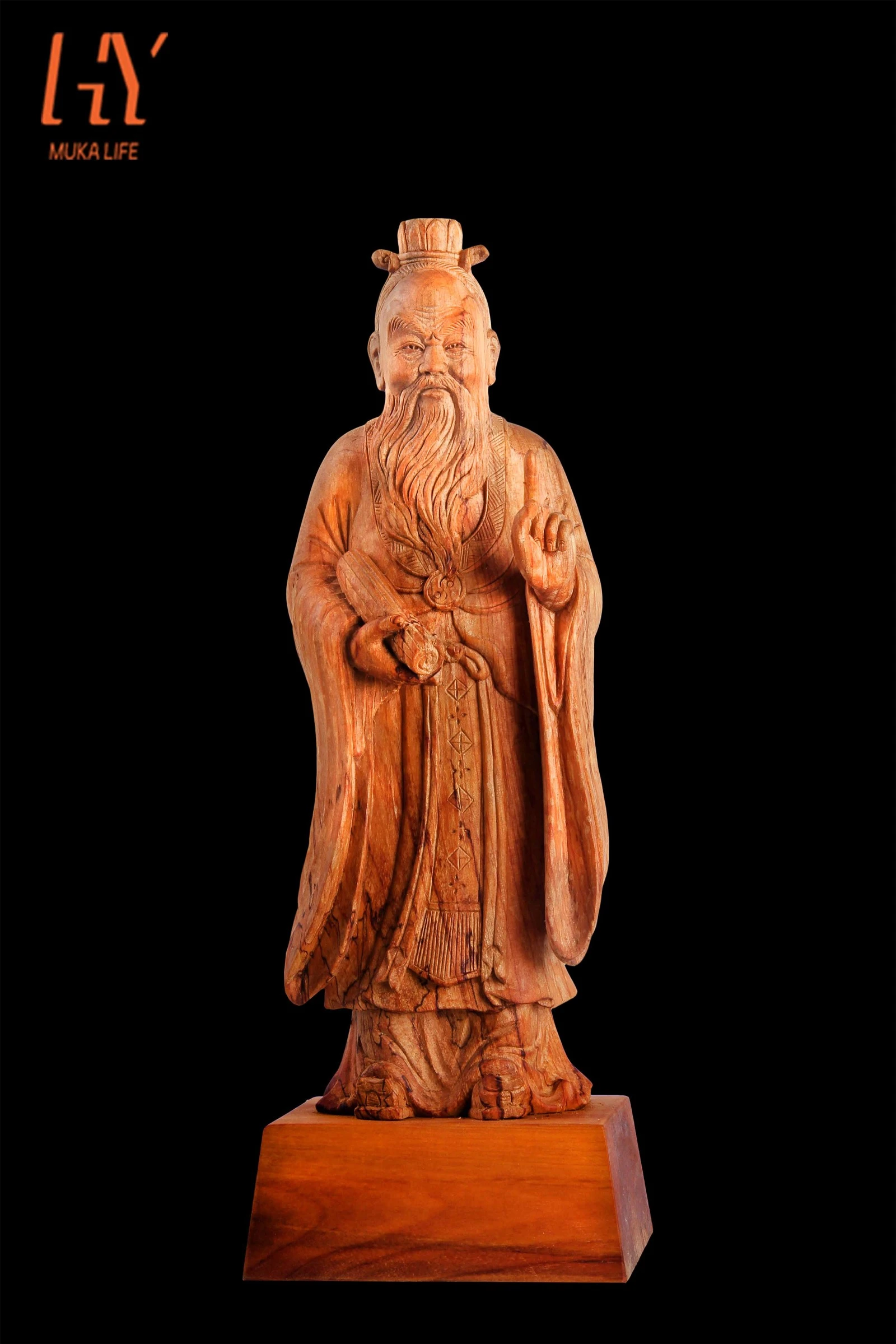
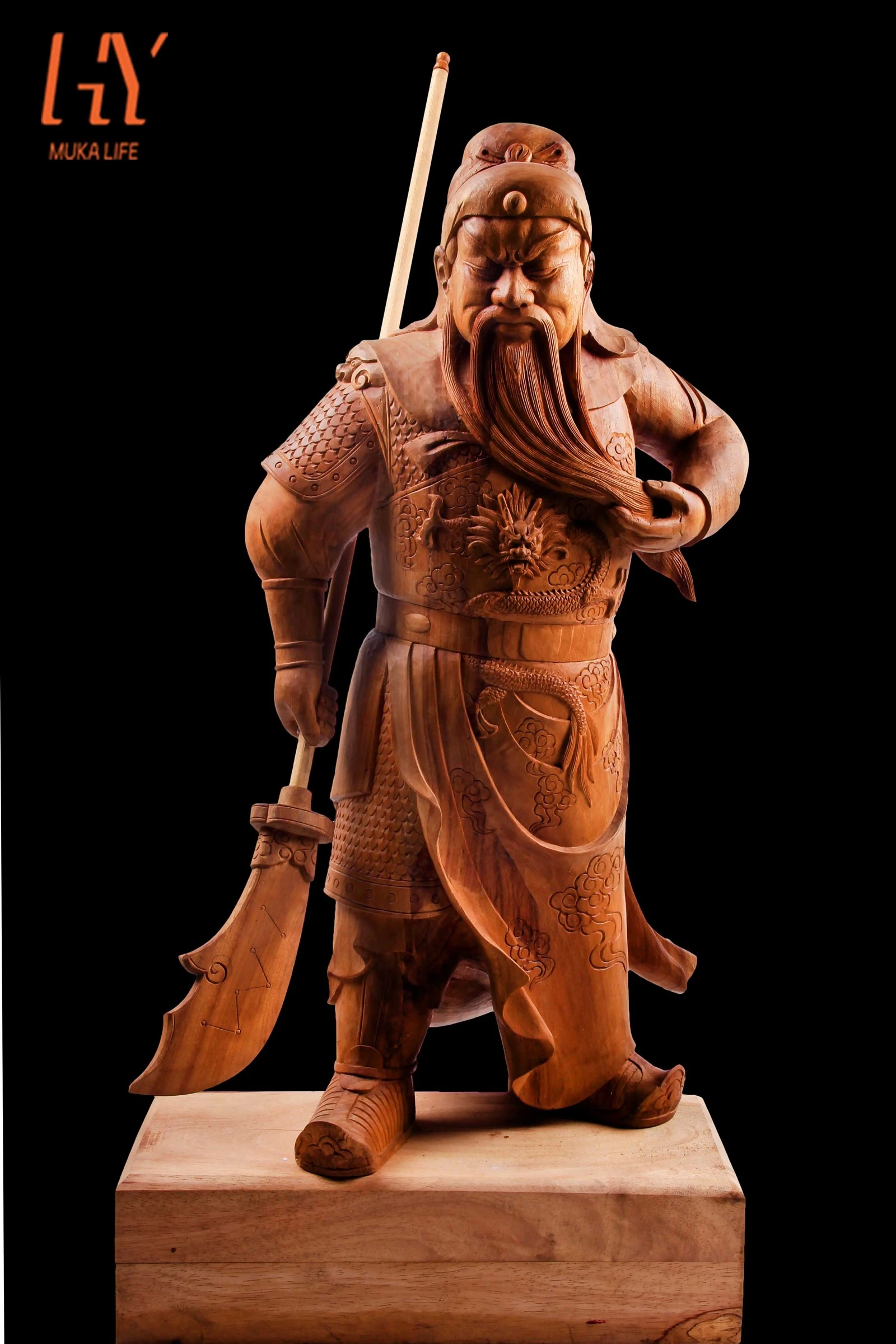
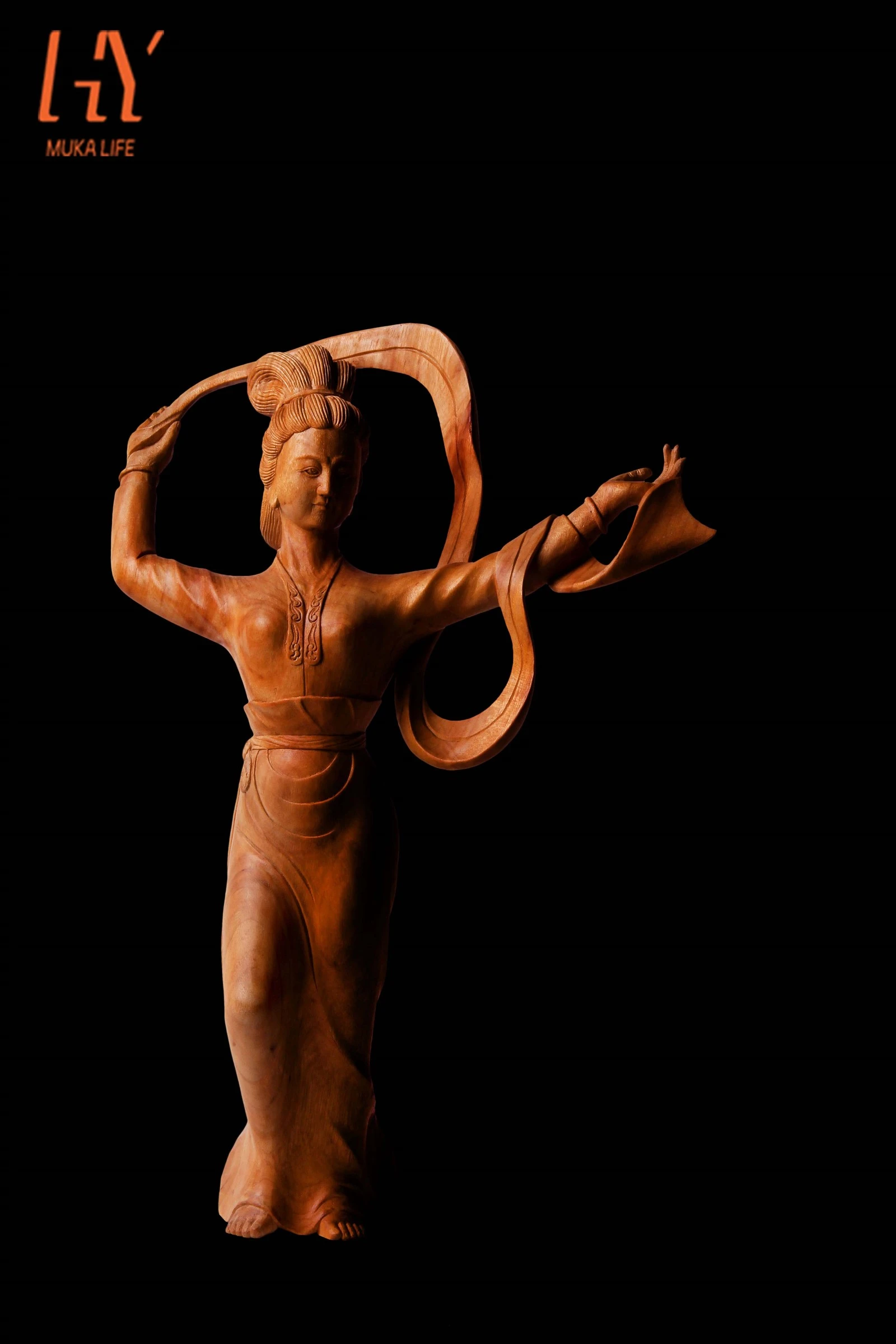
The four major schools of "Dongyang Wood Carving, Yueqing Boxwood Carving, Guangdong Chaozhou Gold Lacquer Wood Carving, Fujian Longan Wood Carving" are called "the four major wood carvings in China". Like other sculpture art, wood carving art was born with the emergence of human beings. When people have aesthetics, wood carving truly becomes an art. Through the inheritance and innovation of generations of craftsmen, various wood carving schools have gradually formed. They have different characteristics, but without exception, satisfying people's demands for beauty in daily life.
Fujian Wood Carving: Alternative Aesthetics in Architecture
Fuzhou wood carving in Fujian Province is also a wood carving art developed based on architectural decoration, furniture decoration and temple statue carving. It matured in the late Ming and early Qing dynasties. Fuzhou wood carvings are made of longan wood, so they are also called "longan wood carving". Longan wood is mainly produced in southern Fujian. The texture is slightly crisp, the texture is fine, and the color is ochre red. The trunks of the old longan wood, especially the roots, are strangely shaped and are good materials for sculpture. Wood carving artists use its roots and crease joints to carve into various figures, birds and beasts according to the situation. The shape is vivid and stable, and the structure is beautiful, which is both in line with the principles of anatomy, and is also moving and exaggerated. The knife technique is either axe and a knife, or a delicate carving, and is round and skillful.
Dongyang Woodcarving: There are paintings in the paintings, and there are scenery in the scenery
The wood carving art in Dongyang City, Zhejiang Province has a long history. It is a traditional folk craft in Dongyang and is known for its "hometown of carvings". Dongyang wood carving is named after it is produced in Dongyang, Zhejiang. In terms of artistic techniques, Dongyang wood carving uses high levels, far and flat surfaces to deal with perspective relationships, and uses the scattered perspective or bird's-eye perspective of traditional Chinese paintings as the composition characteristics. The content it expresses can be richer than Western reliefs. It can fully display the content of the picture, so as to achieve "there are paintings in the painting and the scenery in the scenery."
Chaozhou Wood Carving: Cultural Code for Architectural Decoration
In the old days, when Chaoshan built a house, two craftsmen were often hired to use the middle line as the boundary, and divided it into "Dragon's side" and "Tiger's side" according to the left and right. The conditions were explained in advance, and they did not peek at each other, and they used their own skills. After the completion, they evaluated them. The winners could receive additional bonuses. This mechanism stimulated the development of skills and made Chaoshan Resident Avenue a glorious era in the late Qing Dynasty. Only by combining these decorative arts and architecture themselves can the rhythm of life be seen and the cultural codes in it exist.
Huizhou Wood Carving: The Extreme Desire of Hui merchants
In the old days, Huizhou wood carvings were mostly used to decorate buildings and household appliances. Wood carvings are usually used in Hui style buildings to build beams, beam support, eaves, floor blocking, slabs, windows, railings, etc., and are carved and magnificent. It considers both beauty and practicality. Generally, the railings and eaves below the window and above the patio are used for relief; the round carvings are used for beam support, brackets, sparrow arches, and even moon beams.
In terms of furniture, the ones that use wood carvings are mostly used are beds and wardrobes. These furniture are generally made of high-end wood, and all are decorated with vermilion paint and gold foil to make it more vivid and vivid. After the middle of the Ming Dynasty, with the increase in financial resources of Hui merchants, Juyao's awareness became increasingly strong, and wood carving art gradually transitioned to fine carving, replacing the shallow carving with multi-layer openwork became the mainstream. After entering the Qing Dynasty, the pursuit of the beauty of wood carving decoration became stronger. The painted gold was soaked and the roots were gorgeous. Although it was exquisite, it was sometimes too cumbersome.
Ningbo Wood Carving: Three-point Carving, Seven-point Paint
The red gold wood carvings in Ningbo, Zhejiang have a great influence at home and abroad. Its shape is simple and vivid, with thick knife skills, golden colors and passionate and prosperous. It is a wood carving art that pastes gold paint and vermilion on wood carvings. This artistic effect mainly comes from the lacquer's grinding, scraping, painting and golding, so it is known as "three-point carving and seven-point paint".
Jianchuan Wood Carving: A Work of Beliefs of Ethnic Minorities
Jianchuan Wood Carving is a wood carving art founded by the Bai people of Jianchuan County, Yunnan. Since the Tang and Song dynasties, Jianchuan County has been full of woodworkers and its wood carving skills have been famous since ancient times. Many famous architectural decorations in Kunming, Shizhaibi in Jianshui, Feilai Temple in Baoshan, Guihua Temple in Zhongdian, etc., have contributed to the Jianchuan wood carving artists.
Woodcarving in southern Hubei: "Moving" opera myths to architecture
Wood carvings in southern Hubei mainly come from the junction of the three provinces of Hubei, Hunan and Shu in southern Hubei. The content of the wood carving mostly reflects joy, auspiciousness and longevity, such as the carved bed of "family portraits". It draws on the expression techniques of "bird and insect book" in the Qin and Han Dynasties, and carves the three words "family portraits" composed of 28 birds, symbolizing that the magpies are coming and blessings are filled with the whole family.
Historically, the themes expressed in southern Hubei wood carvings basically come from opera tasks, myths and legends. Of course, there are many animal images, flowers and bird pavilions. Most of these works are combined with carving and relief, and deep relief and shallow relief are connected to express pictures with emotion, scenery, fun and endless taste. Therefore, they have quite local characteristics and are very prominent in artistic personality.