





Canoe Paddle Furniture
What is Canoe Paddle Furniture
Canoe paddle furniture is a type of decorative or functional item that is crafted using repurposed canoe paddles. These paddles are typically no longer usable or are sourced specifically for the purpose of creating furniture or home decor. The paddles can be mounted onto various frames to create coat racks, wall art, headboards for beds, and even tables or stools. The handles of the paddles are often used as legs for furniture pieces, providing a unique and rustic look that evokes a nautical or outdoorsy vibe.
Qualified
Welcome to the "MUKA" -n company dedicated to providing high-quality, handmade refined wooden furniture.
Environment-friendly
"MUKA" furniture not only has the characteristics of durability, but also unique design, showing a strong artistic atmosphere.
Customized Service
Our official website and physical stores show rich wood product furniture products. You can find all kinds of furniture suitable for you here.
Install
We sincerely welcome you to experience our products and services, and I believe you will be attracted by our furniture.
One-stop Solution
Our products are not only sold in the domestic market, they are also exported overseas and are loved by foreign consumers.


What are the Most Common Types of Wood used For Crafting Canoe Paddle Furniture?


Crafting canoe paddle furniture often involves the use of woods that are durable, aesthetically pleasing, and reflective of the natural materials traditionally used in boat building and paddlemaking. The most common types of wood used include:
Ash - Known for its flexibility and strength, ash is a favorite for making canoe paddles due to its ability to withstand stress without breaking. Its light color and straight grain also contribute to its popularity in furniture.
Birch - Hardwood birch is another common choice for canoe paddles. It has a fine, even texture and is resistant to shock and wear, making it suitable for furniture that sees frequent use.
Cherry - Cherry wood has a rich red hue and a fine grain, giving it a sophisticated look. It's relatively hard and takes stains and finishes well, which makes it an attractive option for more decorative pieces of canoe paddle furniture.
Maple - With its dense grain and hardness, maple is another excellent choice for furniture. It polishes to a beautiful sheen and holds up well to dings and scratches, which is important for furniture that may be handled frequently.
Walnut - Walnut offers a dark, luxurious appearance and a smooth texture. It's a hardwood that's known for its durability and resistance to decay, making it ideal for furniture that is meant to last.
Oak - Oak is a classic choice for furniture due to its strength and distinctive grain pattern. Its hardness makes it suitable for heavier pieces of canoe paddle furniture.
These woods are favored not only for their physical properties but also for their visual appeal, which adds warmth and character to the finished furniture pieces. When crafting canoe paddle furniture, the choice of wood can significantly influence the final product's style, durability, and overall aesthetic.
To transform a canoe paddle into functional furniture, one typically follows several steps that involve repurposing and sometimes modifying the paddle itself:
Design Selection: The first step involves deciding on what type of furniture the paddle will become. Common items include coat racks, wall art, magazine racks, and even small tables or stools. The design should take into account the paddle's length, width, and material composition.
Cleaning: Before any modifications, the paddle needs to be thoroughly cleaned. This involves removing dirt, grime, and any existing finishes or sealants. Cleaning ensures that any new treatments will adhere properly.
Modifications: Depending on the desired outcome, the paddle might need to be cut or shaped. For instance, to create a coat rack, one might need to attach hooks to the paddle's shaft or cut off the blade to create a flat surface for mounting.
Finishing: After any modifications, the paddle should be sanded smooth to remove splinters or rough edges. A finish, such as a clear polyurethane, may then be applied to protect the wood and enhance its natural beauty.
Assembly: If the paddle is to be part of a larger structure, such as a table or stool, additional parts like legs, shelves, or support structures need to be attached. These can be crafted from wood, metal, or other materials that complement the paddle's aesthetic.
Mounting: For wall-mounted items like racks or art, holes need to be drilled into the paddle so that screws or bolts can secure it to the wall. Care must be taken to avoid cracking the wood by pre-drilling these holes.
Customization: To personalize the piece, carvings, paint, stain, or decals can be added. This step is optional but can significantly enhance the visual appeal and uniqueness of the furniture.
Final Touches: After all modifications and assembly, the piece should be inspected for stability and safety. Any loose parts should be tightened, and the finish should be given enough time to cure fully before use.
What is the Purpose of a Canoe Paddle Coat Racks?
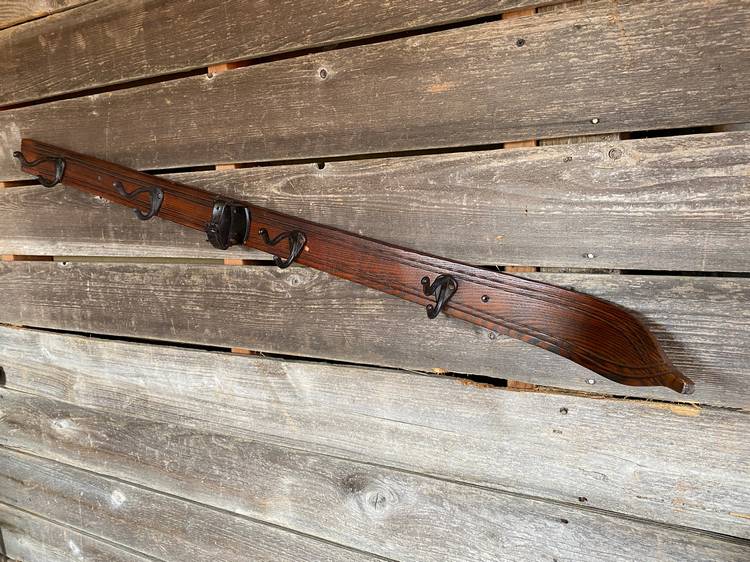
Canoe paddle coat racks serve both a functional and decorative purpose in interior design. They are created by repurposing old or unused canoe paddles to provide a unique way to hang coats, jackets, scarves, and other garments. These racks add an element of whimsy and nautical charm to any room, especially those with a beach house, cabin, or lodge theme.
From a design perspective, canoe paddle coat racks blend utility with aesthetics. Their elongated shape and natural material complement rustic or coastal design schemes, creating a seamless integration with the surrounding decor. The use of real paddles also speaks to the trend of upcycling and sustainable living, as it gives a second life to objects that might otherwise end up in landfills.
In terms of customization, these racks can be modified in various ways, such as grouping several together to create larger hanging surfaces, painting them to match specific color palettes, or adding hooks and other hardware to suit individual needs. They can be hung on a wall horizontally or vertically, depending on space constraints and the desired visual effect.
Overall, canoe paddle coat racks are a practical yet stylish addition to spaces seeking to evoke a sense of adventure, the outdoors, or a carefree lifestyle. Their versatility and ease of customization make them a favorite among those who appreciate creative and eco-friendly design solutions.
Application of Oar Coat Rack
An oar coat rack is a functional and decorative item that leverages the distinctive form of an oar—typically long and slender with one flat side and one rounded side—to create a unique storage solution for coats, hats, and other garments. In the engineering context, considerations for designing and applying an oar coat rack would involve several factors to ensure both aesthetic appeal and structural integrity. Here are key aspects to consider:
1. Material Selection: The material must be strong enough to support the weight of the items to be hung, while also being visually appealing. Common choices include wood (like cedar or pine), metals (such as aluminum or steel), or composites (like fiberglass). Material selection should also account for environmental conditions where the rack will be placed, such as exposure to moisture or UV radiation.
2. Structural Engineering: The oar itself must be engineered to withstand the loads it will bear. This includes reinforcing the attachment points where the oar meets the mounting hardware, ensuring there is sufficient surface area to distribute the weight evenly across the rack.
3. Mounting System: The method of attachment to the wall or other supporting structure is critical. This could involve drilling into studs for wooden mounts, using toggle bolts or molly bolts for hollow walls, or incorporating adhesive strips for lighter-duty applications. The mounting system must be rated to handle the anticipated load.
4. Aesthetics and Design: The rack should be designed to complement the existing interior design. This may involve finishing the wood, powder coating the metal, or incorporating other design elements such as brackets or hooks. The design should also take into account how the rack will be used, with consideration given to accessibility and the arrangement of hanging elements.
5. Durability and Maintenance: The oar coat rack should be designed to withstand regular use and cleaning. Materials and finishes should be selected with durability in mind, and maintenance should be straightforward to preserve the rack's appearance and functionality over time.
6. Safety: The edges and corners of the rack should be smooth to prevent injury, particularly in high-traffic areas. The coat rack should also be securely fastened to the wall to prevent tipping or falling when items are hung.
By addressing these aspects, the application of an oar coat rack can be both practical and visually appealing, blending seamlessly into the architectural and design elements of a space while serving its primary purpose of organizing outerwear.
How do you Hang a Canoe Paddle on the Wall



Hanging a canoe paddle on the wall can serve as an attractive piece of wall art while also providing a place to store the paddle. Here's a step-by-step guide on how to hang a paddle:
Choose the Location: Decide on the spot where you want to hang the paddle. Make sure the area is clear of electrical wires or light switches.
Determine the Paddle's Center of Gravity: Grip the paddle at the center and find the point that balances it upright when held horizontally. This is typically near the center of the paddle blade.
Mark the Hanging Point: Mark the center of gravity on the paddle blade with a pencil. This is where the hook will be attached.
Measure the Paddle: Measure the length of the paddle from the end of the handle to the marked hanging point to determine the height at which the hook should be installed on the wall.
Prepare the Wall: Depending on the type of wall you have, you might need to drill a hole or simply make a pilot mark. If you're hanging the paddle on drywall, you can use a toggle bolt or a heavy-duty picture hanging hook. For studs or plaster walls, you might need to screw directly into the wood.
Install the Hook: Attach the hook at the measured height on the wall. Ensure that it is sturdy and securely fastened to support the weight of the paddle.
Mount the Paddle: Once the hook is in place, hang the paddle on the wall, aligning the marked hanging point with the hook. Adjust the paddle until it stands upright and is balanced.
Secure the Paddle (Optional): If you want extra security to prevent the paddle from swinging or falling off the hook, you can use a small wire or cable tie to attach the paddle to the hook or to another hook slightly above it. This will keep the paddle vertical and stable.
Finish: If necessary, fill any holes from the installation process and touch up any paint to maintain the wall's appearance.
How are Wooden Canoe Bookshelf Made?
Wooden canoe bookshelves are typically handcrafted from start to finish. The process involves several steps and requires a good understanding of woodworking techniques. Here is a general overview of how wooden canoe bookshelves are made:
Design
The first step is designing the canoe bookshelf. This involves creating detailed drawings and measurements that will guide the construction process. The design should consider the dimensions of the bookshelf, the type of wood used, and any special features or embellishments.
Material Selection
Once the design is finalized, the woodworker selects the appropriate type of wood for the project. Hardwoods like oak, walnut, or maple are commonly used because of their strength and durability. The woodworker will choose boards of suitable size and cut them to size based on the design.
Cutting and Shaping
The wood is then cut to shape using saws and other cutting tools. This includes cutting the boards to form the hull of the canoe and shaping them to replicate the curvature and contours of a traditional canoe body.
Joinery
The individual pieces of the canoe bookshelf are joined together using various woodworking joints such as mortise and tenon, dovetail, or lap joints. These joints are crucial for ensuring the structural integrity of the bookshelf.
Sanding
After all the pieces are cut and assembled, they are sanded smooth to remove any rough edges or splinters. Sanding is typically done progressively with finer grits of sandpaper to achieve a smooth finish.
Finishing
The woodworker will apply a finish to the bookshelf, which could be a stain to bring out the grain of the wood, a sealant like varnish to protect the surface, or a combination of both. The finishing process not only enhances the appearance of the bookshelf but also protects it from damage and wear.
Assembly
The shelves are attached to the canoe-shaped frame. Depending on the design, this may involve drilling holes and inserting screws or using other hardware to secure the shelves in place.
Final Touches
Any final touches, such as installing hardware or adding decorative elements, are completed at this stage. The bookshelf is then inspected for any necessary adjustments or improvements.
Installation
Once the canoe bookshelf is fully constructed and finished, it can be installed in its desired location.
What are the Advantages of a Wooden Canoe Bookshelf?
A wooden canoe bookshelf offers several advantages, blending functionality with unique aesthetics that pay homage to classic craftsmanship and nautical design. Here are some of the key benefits:
Aesthetic Appeal: The design of a wooden canoe bookshelf is inspired by the iconic shape of a canoe, providing a visually striking and conversation-worthy piece for any room.
Material Quality: Wood is a durable and sturdy material that can withstand the weight of books and decorative items. When properly maintained, a wooden bookshelf can last for many years.
Craftsmanship: Wooden canoe bookshelves are often handcrafted, showcasing the skill and attention to detail of the artisan who made it. This craftsmanship adds value and character to the piece.
Customization: Wooden canoe bookshelves can be customized in terms of size, wood type, finish, and hardware. This allows for a bookshelf tailored to specific space requirements and personal style.
Versatility: While inspired by nautical themes, a wooden canoe bookshelf is versatile and can complement a variety of decor styles, from rustic to modern.
Natural Beauty: Wood has a natural beauty that adds warmth and texture to any space. The grain patterns and color variations in the wood create a dynamic and organic look.
Eco-Friendly: Depending on the source of the wood, a wooden canoe bookshelf can be an environmentally friendly option, especially if made from sustainably harvested or reclaimed wood.
What is the Spacing for Oar Hall Tree Coat Rack Hooks
The spacing for the hooks on an Oar Hall Tree Coat Rack would typically depend on the design and size of the rack itself. Generally, the hooks are spaced evenly across the width of the rack to accommodate coats, hats, or other items.
For a standard-sized hall tree coat rack, each hook might be spaced approximately 3 to 4 inches apart. This allows for enough room to hang multiple items without them becoming entangled or causing unnecessary stress on the hooks.
However, if the Oar Hall Tree Coat Rack is custom-made or specifically designed with a unique style in mind, the spacing could vary. Some coat racks might have hooks spaced closer together for a more compact arrangement, especially in smaller spaces. Conversely, some might have hooks spaced further apart to accommodate larger items or provide easier access.
To determine the exact spacing for a particular Oar Hall Tree Coat Rack, it would be best to refer to the manufacturer's specifications or measurements if the product is available online or in stores. If the product is bespoke or handcrafted, the maker would be able to provide the specific measurements for the hook spacing.

Welcome to the "MUKA" -n company dedicated to providing high-quality, handmade refined wooden furniture. Since its establishment, we have always taken the responsibility of inheriting and carrying forward traditional woodworking skills, and providing consumers with elegant, durable and unique furniture.We pay great attention to the quality and services of the product, and always adhere to the principle of customer first. In order to allow every consumer to enjoy intimate services, we have established a comprehensive pre -sales consultation and after -sales service system. Whether you encounter any problems after you buy or buy, our professional team will answer you in time to ensure that your shopping experience is happy and worry -free.
FAQ
As one of the leading canoe paddle furniture manufacturers in China, we warmly welcome you to buy high-grade canoe paddle furniture for sale here from our factory. All customized products are with high quality and competitive price.
Ski Bar Swivel Chair, Ski Wall Shelf, Black Forest Bear Bench