





Ski Lamps
What is Ski Lamps
Ski lamps, also known as headlamps for skiing, are specialized lighting devices worn by skiers to illuminate the path ahead during low-light conditions or night skiing. These lamps are designed to be lightweight, durable, and provide a focused beam of light that can adapt to various terrains and snow conditions.
Advantages of Ski Lamps
Enhanced Visibility: The most significant advantage of ski lamps is the ability to illuminate the trail ahead. This allows skiers to navigate through snow-covered trails, trees, and obstacles that might be difficult to see in the dark.
Improved Safety: By illuminating the path, ski lamps help skiers avoid potential hazards such as unexpected moguls, branches, and other skiers. This increased awareness can prevent accidents and injuries.
Allows for Extended Skiing Hours: With the aid of ski lamps, skiers can take advantage of dawn patrols or continue skiing after sunset, which is especially beneficial in areas with limited daylight hours or at nighttime ski resorts.
Convenience: Ski lamps are hands-free, which means skiers can keep their gloves on and their poles in hand while still having adequate light to see where they are going.
Versatility: Many ski lamps are adjustable, allowing skiers to focus the beam where needed—either broadly to light up a large area or narrowly to concentrate on a specific spot directly in front.
Water Resistance: Good quality ski lamps are often water-resistant or waterproof, making them suitable for use in wet snow conditions.
Energy Efficiency: Modern ski lamps are powered by batteries or rechargeable packs, offering efficient and long-lasting illumination without the weight and bulk of traditional lighting solutions.
Comfort and Fit: Ski lamps come with adjustable straps that can be worn comfortably around the head or helmet, ensuring a secure fit even during high-speed descents.
Collaborative Skiing: When skiing in a group, lamps allow everyone to see each other and communicate more effectively on the slopes, improving the social aspect of the activity.


Qualified
Welcome to the "MUKA" -n company dedicated to providing high-quality, handmade refined wooden furniture.
Environment-friendly
"MUKA" furniture not only has the characteristics of durability, but also unique design, showing a strong artistic atmosphere.
Customized Service
Our official website and physical stores show rich wood product furniture products. You can find all kinds of furniture suitable for you here.
Install
We sincerely welcome you to experience our products and services, and I believe you will be attracted by our furniture.
One-stop Solution
Our products are not only sold in the domestic market, they are also exported overseas and are loved by foreign consumers.
LEDs (Light Emitting Diodes) are the most commonly used light source in ski lamps. They are favored for their durability, efficiency, and ability to emit light in a compact form factor. LEDs consume less power compared to traditional incandescent bulbs, which translates to longer battery life for ski lamps. Additionally, LEDs produce very little heat, which reduces the risk of overheating and makes them safer for close-proximity use. Their small size allows for the creation of lightweight, compact lamp designs that can be comfortably mounted on helmets or headgear. Furthermore, LED technology enables a variety of light settings, including different brightness levels and strobe modes, which are particularly useful in emergency situations or for signaling. The longevity of LEDs means that ski lamps with this light source typically have a longer useful life before the diodes begin to fail or dim significantly.

The beam adjustment system in ski lamps typically consists of mechanisms that alter the focus of the light emitted by the lamp. This can be done through one or more of the following methods:
Reflector Adjustment: Some ski lamps have parabolic reflectors that can be adjusted to change the concentration of the light beam. By moving the reflector closer to or further away from the light source, the user can control whether the beam is more focused (spot mode) or dispersed (flood mode).
Lens System: Other lamps use interchangeable lenses or a sliding lens mechanism to adjust the beam. These lenses might have different optical properties, such as varying degrees of diffusion, to allow the user to switch between concentrated light and a broader spread of light.
Digital Controls: Some advanced ski lamps feature digital controls that allow for precise adjustments of the beam intensity and spread. These controls might be integrated into the lamp housing or paired with a remote control.
The benefits of a well-designed beam adjustment system include:
Adaptability: The ability to change the beam focus allows the skier to tailor the light output to the current conditions and their specific needs. For example, a narrow beam might be preferred for navigating through trees, while a wider beam would be better for open slopes.
Efficiency: By focusing the beam, the skier can reduce energy consumption since less light is wasted illuminating areas that are not in immediate need of visibility. Conversely, a broad beam can be used to cover more area quickly.
Comfort: Proper beam adjustment can help reduce eye strain by providing the ideal balance of focused and peripheral vision, which is especially important when wearing goggles in cold or windy conditions.
Safety: The ability to quickly adjust the beam can be crucial in dynamic environments where the skier may encounter sudden changes in terrain or unexpected obstacles.
Ski Lamps How do They Compare to Other Outdoor Lighting Devices
Ski lamps are specifically designed to meet the unique requirements of skiing in low-light conditions, which sets them apart from other types of outdoor lighting devices. Here's a comparison of ski lamps to some other common outdoor lighting tools:

Headlamps: Headlamps are versatile lighting devices that can be used for various outdoor activities, including hiking, climbing, and camping. While some headlamps are suitable for skiing, ski lamps are often engineered with features that cater specifically to the sport, such as a higher waterproof rating, a more robust build to withstand impacts, and a beam pattern optimized for snow conditions.
Spotlights and Lanterns: These are generally larger, handheld, or stand-alone lighting solutions. Spotlights are often used for long-distance illumination, while lanterns provide ambient lighting. In contrast, ski lamps are designed to be hands-free, compact, and lightweight to minimize interference with skiing movements.
Flashlights: Flashlights are typically handheld and come in various sizes. They are not designed for extended wear like ski lamps and can interfere with skiing due to their bulkier form. Ski lamps are ergonomically designed to be worn securely on the head or helmet, providing consistent, unobstructed lighting without needing to hold onto them.
Hunting Lights: These are designed for hunters and often include features such as infrared or thermal imaging, which are not necessary for skiing. Ski lamps focus on providing bright, white light to navigate snowy slopes safely.
UV Lights: UV lights are used for specific purposes, such as detecting scat or tracking, and are not suitable for general illumination during skiing.
In terms of technical specifications, ski lamps may have a lower maximum output (in lumens) compared to some high-power flashlights or spotlights, but they are designed to provide an adequate, focused beam for close-range tasks like reading trail markers or navigating through powder. Their battery systems are tailored for cold weather performance, and their durability is enhanced to withstand the physical demands of skiing.
Ski lamps offer a balance between brightness, beam focus, durability, and hands-free operation, making them the optimal choice for illuminating the skiing environment. Other lighting devices might offer greater brightness or versatility, but they lack the specialized features and form factor that make ski lamps ideal for the sport.
Are there Any Solar-Powered Ski Lamps Available, and How Efficient are They
Solar-powered ski lamps do exist, although they are less common than those powered by traditional batteries or rechargeable packs. These lamps incorporate solar panels that absorb sunlight and convert it into electrical charge to power the LED lights. The efficiency of solar-powered ski lamps depends on several factors:
Battery Technology: The type of battery used in the lamp greatly affects its overall efficiency. Lithium-ion batteries tend to hold a charge better than other types and can store energy gathered during the day for use at night.
Solar Panel Efficiency: Higher-quality solar panels with better photovoltaic cells can convert more sunlight into usable energy. However, due to the limited exposure to sunlight during skiing activities, the panels must be highly efficient to accumulate enough charge.
Charging Time: The amount of time the lamp is exposed to sunlight is a critical factor in charging the battery sufficiently. For solar lamps to be effective, there needs to be sufficient daytime exposure to solar radiation.
Lighting Requirements: During skiing, particularly at night or in low-light conditions, a lamp needs to provide a stable and bright light. Solar lamps must balance the need for continuous illumination with the variable charging capabilities of solar power.
While solar-powered ski lamps offer the advantage of not requiring manual recharging, their efficiency and reliability can be inconsistent compared to lamps with conventional power sources. They might be more suitable for daytime activities or for use in regions with prolonged daylight hours, where they can charge adequately during the day for use in the evening. For activities that predominantly occur in darkness, solar lamps might not provide the consistent performance required.
When considering a solar-powered ski lamp, it's important to assess the manufacturer's specifications regarding charging time, battery life, and light output to determine if it meets the user's specific needs and expectations. Additionally, the environmental impact of solar-powered lamps can be lower, which might be a consideration for users who prioritize sustainability.
Can Ski Lamps Be Recharged
Yes, many modern ski lamps are designed to be rechargeable, offering convenience and reducing the need for disposable batteries. The most common methods for recharging ski lamps include:
1.USB Charging: A popular method involves USB ports, which allows the user to charge the lamp using a standard USB charger plugged into a wall outlet or a computer's USB port. The lamp is usually equipped with a micro-USB, USB-C, or similar connector.
2.Standard Outlet Charging: Some lamps come with an AC adapter that directly connects to a standard electrical outlet. This method typically requires removing the lamp from its mount or headband to access the charging port.
Wireless Inductive Charging
A growing number of devices, including some ski lamps, support wireless charging through magnetic induction. The lamp is placed on a charging pad or mat, eliminating the need for cables.
Solar Charging
As mentioned earlier, some lamps integrate solar panels that can recharge the battery when exposed to sunlight. These lamps often have additional recharge methods for use in low-light conditions.
Removable Batteries
Some ski lamps use removable batteries that can be charged separately from the lamp itself. This allows for quick battery swaps in the field if the primary battery runs out of charge.

How do Ski Lamps Achieve Water Resistance
Ski lamps achieve water resistance through a combination of design elements and material selection. Key features include:
Sealed Housing: The internal electronics of the lamp are contained within a sealed housing that prevents water ingress. This housing is often made from durable plastics or rubber that can flex without losing its seal.
Gaskets and Seals: Rubber gaskets are placed around the lens, switch areas, and any seams where the housing comes together. These gaskets compress when the lamp is assembled, forming a watertight barrier against moisture.
Waterproof Coatings: Some parts, especially the exterior, may be treated with waterproof coatings to further enhance their resistance to water and snow.
O-Rings: Similar to gaskets, O-rings are used to create a tight seal at points where disassembly for battery replacement or bulb changes is necessary.
Material Selection: Materials used in construction are chosen based on their ability to resist waterlogging and retain flexibility in cold temperatures. Silicone and neoprene are common choices for gaskets and straps.
The standards to which ski lamps adhere vary by manufacturer and region, but many follow the International Electrotechnical Commission (IEC) standard 60529, which outlines the degrees of protection provided by enclosures (often abbreviated as IP Code or Ingress Protection Rating). A typical rating for ski lamps might be IPX4 or IPX6, which indicates resistance to water spray from multiple directions. Some high-end models may have an IPX7 rating, meaning they can be submerged in water up to 1 meter deep for up to 30 minutes. However, it's important to consult the manufacturer's specifications since ratings can vary.
Manufacturers also conduct their own testing beyond standardized protocols to ensure their products can withstand the extreme conditions encountered during skiing, such as heavy snowfall and rapid temperature changes. These proprietary tests often simulate real-world conditions more closely than standardized benchmarks.

Ski table lamps typically do not generate heat as a primary function; instead, they are designed to provide illumination. If a ski table lamp were to produce heat, it would likely be due to the normal operation of the lamp's electrical components, such as the bulb or LED, and the conversion of electrical energy into light. Any heat produced would generally dissipate quickly due to the design of the lamp, which includes ventilation and heat sinks to prevent overheating. Safety features such as automatic shutoffs, thermal fuses, or temperature sensors are often included to prevent overheating and potential fire hazards. It is important to note that the term "ski table lamp" generally refers to a light source rather than a heating device. If additional heating functionality were desired, it would be integrated separately, possibly using an external heater or a heated element specifically designed for that purpose.
Ski table lamps typically serve as indoor lighting fixtures and, like other types of table lamps, can often be dimmed or adjusted to different light settings. This feature is usually achieved through a built-in dimmer switch or a remote control that allows the user to customize the brightness level according to preference or the room's ambiance.
Dimming capabilities are common in modern lamps and can be implemented in various ways:
Hardware Dimmer Switch: Some lamps have a physical dimmer switch integrated into the lamp body or the lamp shade. Users can turn the knob or slide the lever to increase or decrease the brightness of the lamp.
Wireless Remotes: Certain models come with a wireless remote control that communicates with the lamp to adjust the light intensity.
Smart Home Integration: Lamps can also be part of a smart home ecosystem, allowing control through smartphone apps, voice commands via assistants like Amazon Alexa or Google Assistant, or through other smart home devices.
Touch Sensors: Some contemporary lamps feature touch-sensitive surfaces that respond to taps or swipes to change the light settings.
The light source in these lamps is usually an LED, which provides a long lifespan, energy efficiency, and the ability to produce different color temperatures (warm white, cool white, etc.). The ability to adjust light settings is beneficial for creating a comfortable environment, saving energy by using only as much light as needed, and extending the life of the lamp by reducing the intensity when higher brightness is not required.
When purchasing a ski table lamp, checking for dimmable features and confirming compatibility with existing light switches or smart home systems is advisable. If the lamp is designed for indoor use only, it should be clearly indicated, as the terms "ski" or "mountain lodge" might be used in the product name or description for aesthetic reasons rather than functional ones.
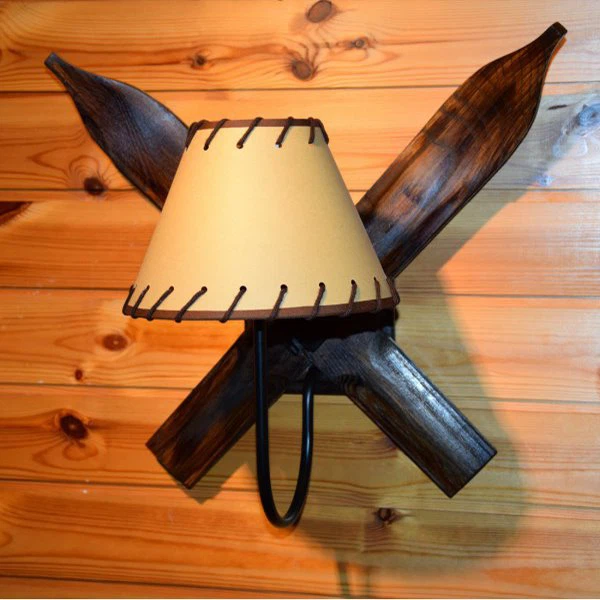
Application of Ski Wall Lamp
Ski wall lamps are designed to blend aesthetics with practicality, making them suitable for a variety of applications. They are often used to create a cozy atmosphere in ski lodges, mountain cabins, and homes with a winter sports theme. Here are some specific applications:
Decorative Lighting
Ski wall lamps can serve as decorative elements in living rooms, hallways, or bedrooms, complementing a winter sports or alpine decor scheme.
Task Lighting
They can provide focused lighting over workspaces, such as desks or countertops, in home offices or hobby rooms, enhancing visibility for tasks like reading or crafting.
Ambient Lighting
In larger spaces like dining areas or kitchens, ski wall lamps can contribute to general illumination, creating a warm and inviting environment for meals or gatherings.
Outdoor Use
With appropriate weather-resistant materials, ski wall lamps can be installed outside to light walkways, entryways, or patios, providing safety and style even when the weather is chilly.
Accent Lighting
They can be strategically placed to highlight artwork, architectural features, or collections, offering a subtle yet effective way to showcase personal interests or design elements.
Nightstand Lamps
Ski wall lamps can be used as bedside lights in guest bedrooms or master suites, offering a unique touch and convenient lighting for nighttime reading or getting ready in the morning.

Welcome to the "MUKA" -n company dedicated to providing high-quality, handmade refined wooden furniture. Since its establishment, we have always taken the responsibility of inheriting and carrying forward traditional woodworking skills, and providing consumers with elegant, durable and unique furniture.We pay great attention to the quality and services of the product, and always adhere to the principle of customer first. In order to allow every consumer to enjoy intimate services, we have established a comprehensive pre -sales consultation and after -sales service system. Whether you encounter any problems after you buy or buy, our professional team will answer you in time to ensure that your shopping experience is happy and worry -free.
FAQ
As one of the leading ski lamps manufacturers in China, we warmly welcome you to buy high-grade ski lamps for sale here from our factory. All customized products are with high quality and competitive price.
Black Forest Wood Bear Display Cabinet, Ski Bar Stool, Ski Bookends